
A weak margin outlook in the near term and lack of fresh triggers may keep the Godrej Consumer Products (GCPL) stock under pressure. The stock, after tepid September quarter (Q2) results and marginal downward revision in earnings estimates, declined 3.5 per cent in trade on Friday. Though consolidated sales of the company, which owns the Goodknight and Cinthol brands, grew 8.5 per cent year-on-year (YoY), its operating profit declined because of the sharp contraction in margins.

Urals and Sokol accounted for every 4 out of 5 barrels of Russian supplies to India last year.

Despite the robust growth in this country, Apple's India share in its overall global sales remained modest -- constituting 1.5 per cent of its overall turnover of $389 billion in FY23.

With a new chief executive officer (CEO) at the helm, the country's largest two-wheeler maker Hero MotoCorp is now looking to cut flab and move towards a leaner organisation. It has launched a voluntary retirement scheme (VRS) for its staff as it aims to make the organisation 'agile and future-ready'. Recently, the company's erstwhile chief financial officer (CFO) Niranjan Gupta was elevated as CEO.

In a major decision, the RBI on Friday announced that UPI payment limit to hospitals and educational institutions will be raised to Rs 5 lakh from Rs 1 lakh at present and hiked the cap for e-mandates for recurring payments to Rs 1 lakh. Unveiling the December bi-monthly monetary policy, Reserve Bank Governor Shaktikanta Das said the limit for various categories of Unified Payments Interface (UPI) transactions has been reviewed from time to time. "It is now proposed to enhance the UPI transaction limit for payment to hospitals and educational institutions from Rs 1 lakh to Rs 5 lakh per transaction," he said.

With the Securities and Exchange Board of India allowing the extension of trading time by two-and-a-half hours, stock brokerage companies fear loss in productivity. However, they expect a rise in volumes simultaneously, at virtually no big rise in costs.

CMC was the subject of buying on Thursday as the company announced that it has bagged a number of projects worth Rs 100 crore (Rs 1 billion) including an international order from a Bahraini bank.

If Tesla comes in, India's position as a manufacturing hub will rise many notches, as it will become only the second country, after China, to have both Apple as well as Tesla.

The One97 Communications stock saw a surge in interest as the company's operating performance update for August was considered positive by the Street. In addition, there was a news buzz as the company released a new hitech soundbox, which has longer battery life and processes all major cards. The performance indicates that the company, which is better known by its Paytm brandname, is still on course to achieve its guidance of going cashflow positive by the end of the 2023-24 financial year (FY24).

Crucial reforms in Muslim personal law, especially laws related to inheritance and adoption, need to be initiated forthwith; historically speaking, without the State's backing, hardly has any reform taken place or allowed to prevail, asserts Mohammad Sajjad.

The banking regulator was uncomfortable with the runaway pace at which consumer credit was growing.

The supply chain for fast-moving consumer goods (FMCG) companies is seeing congestion due to persistently low demand. This has led to an increase in inventory days, with stocks accumulating at distributors and compelling them to extend higher credit periods to retailers. Distributors, Business Standard spoke to, revealed that demand inventory days have more than doubled in some cases, forcing them to offer credit terms as long as 45 days to retailers, as consumer offtake continues to face pressure.

India's trade ties with Israel have only strengthened in the years after 2019. The total value of trade rose to $10.5 billion on a rolling four-quarter basis in June 2023 from $5.5 billion in the same month in 2019, shows a Business Standard analysis of data from the Centre for Monitoring Indian Economy (CMIE). A rolling four-quarter number provides a comparable figure across different time periods.

The reason? Price of open cell panels has gone up 15%. One of the main components in the manufacturing of TV sets, open cells contribute to 60%-65% of the manufacturing cost.

Nikhil Anand, senior vice president, operations, at NLB Services explains why professionals who are adept at data, cloud computing and cybersecurity will earn well in 2024.

Higher input cost is likely to weigh on Auto sector's Q4 numbers.

An acute drug shortage in the US and stable pricing along with product launches are likely to boost revenues of India's pharmaceutical companies during the first quarter of this financial year, analysts said. Most brokerages estimate a top line growth of around 14-15 per cent, with earnings before interest, taxes, depreciation, and amortisation (Ebitda) growth of 24-30 per cent for Q1 of FY24. Hospitals are, however, likely to report lower occupancy rates, and diagnostics companies may witness an impact from delayed monsoon.

'Will make sure that we create value. We will again look for organic and inorganic opportunities.'

The government on Friday approved an electric-vehicle policy, under which duty concessions will be given to companies setting up manufacturing units in the country with a minimum investment of $500 million, a move aimed at attracting major global players like US-based Tesla. According to an official statement, the companies setting up manufacturing facilities for e-vehicles will be allowed to import a limited number of cars at lower customs duty. The policy seeks to promote India as a manufacturing destination for EVs and attract investment from reputed global EV manufacturers, it added.

Singapore Airlines' deal with Tata Sons (Tata) will inject a further SGD 360 million ($267 million) into Air India. It will give SIA a 25.1 per cent stake in the enlarged Air India group following its takeover by Tata and merger with Vistara Airlines. The November 2022 deal between Singapore Airlines and Tata Sons to further inject $267 million into Air India is one of the key strategic initiatives for future growth mentioned in the quarterly financial report. This agreement is still subject to regulatory approval. SIA in the statement said, "The merged entity will be four to five times larger in scale compared to Vistara, with a strong presence in all key airline segments in India.

The sector seems set for a rally that may be somewhat temporary.

Russian oil supplies to India will continue to flow unhindered and suppliers will come up with ways to sidestep secondary sanctions, a Russian official told Business Standard.

Textile stocks have exhibited a mixed performance so far this calendar year (CY23), amidst higher domestic cotton prices and tepid global demand. Shares of Page Industries, Dollar Industries, Lux Industries, and VIP Clothing have declined up to 13 per cent so far in CY23, as against a 9 per cent jump in the S&P BSE Sensex. On the contrary, shares of Arvind, Welspun India, Raymond, and Gokaldas Exports have gained up to 51 per cent, during the same period.

All stock option contracts expiring on or after January 27 will follow the European style.
Irregular rainfall and a pick-up in commodity costs are expected to weigh on the demand and margins of fast-moving consumer goods (FMCG) companies. Most companies reported a sharp expansion in gross margins in the April-June quarter (first quarter, or Q1) of 2023-24 (FY24), given the lower prices of key raw materials and earlier price hikes. Furthermore, there were expectations that cost savings being passed on could reflect in volume growth going forward. However, these hopes could be dashed if demand recovery, especially in the rural segment, stalls, and gains on the raw material front start to recede.

Maruti Suzuki India's net profit surged 80.3 per cent to Rs 3,716.5 crore in the September quarter, driven by better sales, softening commodity prices, cost reduction efforts and higher non-operating income. The company had delivered a net profit of Rs 2,061.5 crore in the year-ago period, Maruti Suzuki India said in a statement on Friday. Maruti said it is expecting the affordability of small cars in the domestic market to come back in the next 2-3 years in the face of rising income levels of people and a growing economy, among others.

The "asset-right" strategy, reiterated by ITC chairman Sanjiv Puri during the company's 112th annual general meeting (AGM) on August 11, received a thumbs up from the analysts. They, however, believe that sustained earnings growth and synergies with the demerged hotel's vertical will help the stock break out from the ongoing consolidation. "The stock is expected to consolidate between Rs 420 and Rs 450 in the near future.

10 non-bank and non-finance stocks from the BSE500 Index universe that offer an optimal blend of low valuation, reasonably robust revenue and earnings growth in recent quarters, a strong balance sheet, and most importantly, positive cash flow from their operations.

Eicher Motors is a leader in the premium motorcycle segment, where it holds market share of over 85 per cent under the Royal Enfield (RE) brand. The company's joint venture VE Commercial Vehicles (VECV) with Volvo, where it holds 54.5 per cent stake, gives it a strong footing in commercial vehicles (CVs). The company had good results in FY23 and it has a strong balance sheet and good operating margins.

Industrial metals (ferrous and non-ferrous) suffered great volatility once the Ukraine War began in February 2022. First, there was a sharp price rise due to fears of supply disruption, followed by weak global demand. China's weakness and rolling lockdowns have hit production and demand.

The Union government's revenue from securities transaction tax (STT) is on track to exceed its Budget projection for the current fiscal year, with the mop-up already surpassing 50 per cent of the annual estimate. Provisional figures reveal that the Centre has collected approximately Rs 14,000 crore in the first half of this fiscal year up to September, according to a government official. This amount exceeds half of the full-year target of Rs 27,625 crore set for FY24.

While rising interest rates and tighter liquidity are giving negative signals for the financial sector, increasing economic activity could mean higher business volumes for lenders. Liquidity in the banking system has moved from Rs 8 trillion surplus into a deficit of Rs 33,000 crore over the 2022 calendar year. By the end of November, bank credit had grown 17.5 per cent YoY (year-on-year).

In the last three years, 20 gardens have changed hands, and 90 per cent of the buyers are from non-tea background.

Global gold demand has seen a year-on-year decline of 8 per cent during the April-June period to 948.4 tonnes and going ahead further monetary tightening and continued dollar strength may pose headwinds, says a report. According to the WGC Gold Demand Trends Q2 2022 report, the total gold demand during the second quarter of 2021 stood at 1,031.8 tonnes. The year-on-year demand was affected by increase in gold electronic traded funds (ETFs) outflow, decline in Central banks buying and lower demand from the technology segment, the report said.

Despite multiple headwinds at the start of 2023, the Indian markets delivered a strong performance, posting 19-20 per cent growth for the year. Even as new records were set, investor sentiment remains strong going into 2024, given the lower inflation, expectations of steady to lower interest rates, higher economic growth, and strong inflows. However, the overriding concern for most brokerages is valuations.

Margins for the oil refining and retailing sector have moved off their peaks, and the average integrated margins (refining plus marketing) for oil marketing companies (OMCs) have normalised. The ascent in crude oil prices, combined with static retail prices, has depressed marketing margins for diesel and petrol. However, the fall in marketing margins has been offset by increased gross refining margins (GRMs).

Tata Motors surpassed Maruti Suzuki (India) (MSIL) to become the most-valuable automobile company, in terms of market capitalisation (mcap), after a gap of seven years. With this, the company's stock hit a new high on the BSE on Tuesday (January 30). The combined mcap of Tata Motors (Rs 285.51 crore) and Tata Motors DVR (Rs 29,119 crore) stood at Rs 3.146 trillion.

Corporate India is starting to step up its capital expenditure plans amid government incentives and signs of rising demand, company executives and analysts have indicated. This coincides with the Reserve Bank of India (RBI) recently citing a double-digit growth in private capital expenditure. Healthy balance sheets of banks and corporates, along with increasing capacity utilisation and improving business sentiment, are contributing to a favourable environment for sustained growth in private sector investments, the RBI said in its policy last week.

Brokerages have cut their estimates of listed diagnostics players for the financial year 2023-24 (FY24) after mixed December quarter results and muted near-term outlook. Their volumes and realisations will be under pressure due to weakness in Covid-adjusted performance and higher competitive pressures, the brokerages believe. In a post-Q3 results note on Dr Lal Pathlabs, Bhavesh Gandhi of YES Securities pointed out that there has been a lack of volume revival in recent quarters, with an increasing likelihood that FY24 too would be a work-in-progress year for the company's initiatives to bear fruit.
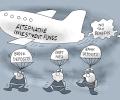
Portfolio management services (PMS), catering to higher networth individuals (HNIs), are facing tough competition from emerging alternative investment funds (AIFs), evident from their dwindling client base. In May, the number of clients for the industry stood at 125,390, down 20,528 in two months, shows data from the Securities and Exchange Board of India (Sebi). "PMS managers also have a high active ratio, which means their portfolios are quite differently positioned and more actively managed, compared to the benchmark, which is also a highlight for long-term investors.
